


Moroccan Pendant Lights for Stairwells and High Ceilings
Posted by E Kenoz on 5th Apr 2026
Stairwells and high ceilings present one of the most exciting opportunities in home lighting, and also one of the most common missed opportunities. That tall, vertical space begs for something dramatic, yet many homeowners leave it empty or install a basic flush mount that disappears against the ceiling. A Moroccan pendant light or chandelier turns that dead vertical space into the visual centerpiece of your home.
Why Moroccan Fixtures Work So Well in Tall Spaces
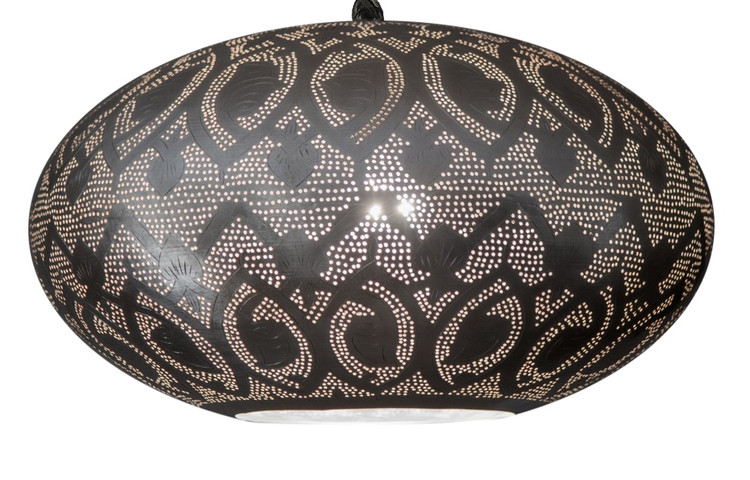
Most lighting styles are designed for standard 8 to 9 foot ceilings. Moroccan fixtures, by contrast, were originally designed for riads and palaces with soaring ceilings and open stairwells. The proportions, the long chain drops, and the way pierced metalwork throws light in every direction were all built for exactly these kinds of spaces.
When you hang a Moroccan pendant in a stairwell, the light patterns play across multiple levels. Someone standing at the bottom sees a different shadow pattern than someone on the landing above. The fixture becomes a living piece of art that changes depending on where you stand.
Sizing Your Fixture for the Space
The biggest mistake people make with high ceiling lighting is going too small. A 12-inch pendant that looks perfect in a bedroom will look like a tiny ornament dangling in a two-story stairwell. Here are sizing guidelines based on ceiling height:
Ceiling Height to Fixture Size
- 10 to 12 feet: 18 to 24 inch diameter pendant or chandelier
- 12 to 16 feet: 24 to 30 inch diameter. This is where Moroccan chandeliers really shine, as their multi-tier construction fills the vertical space naturally.
- 16 to 20 feet: 30 to 36 inches or larger. Consider a cluster of two to three pendants at staggered heights for an even more dramatic effect.
- Over 20 feet: Go big. A 36-inch-plus Moroccan chandelier or a grouping of large pendants. Anything smaller will be swallowed by the space.
A useful rule of thumb: add 2 to 3 inches of fixture diameter for every additional foot of ceiling height above 8 feet. So a 16-foot ceiling calls for roughly 24 to 30 inches of fixture width.
Chain Length: Getting the Drop Right
Chain length determines where your fixture sits in the vertical space, and getting it right is critical for both aesthetics and function.
For Stairwells
The bottom of the fixture should hang at or slightly above the level of the upper floor railing. This positions it so it is visible from both levels but does not obstruct the sightline or create a hazard when carrying items up the stairs. Measure from the ceiling to the top of the upper railing, then subtract the fixture height. That is your chain length.
For Open Great Rooms and Vaulted Ceilings
If the fixture hangs over a living area rather than a stairwell, the bottom should be at least 7 feet above the floor in any area where people walk. Over a dining table, it can hang lower, typically 30 to 36 inches above the table surface.
Ordering Extra Chain
Most Moroccan pendants ship with 3 to 4 feet of chain. For high ceilings, you will almost certainly need additional chain. Order it at the same time as the fixture to ensure the finish matches. Many suppliers offer extension chain in matching brass, black, or silver finishes.
Visual Impact from Below
One of the unique qualities of Moroccan pendant lights in stairwells is the view from directly below. Most fixtures are designed to look their best from the side, but Moroccan lanterns and pendants often feature intricate bottom panels or open bottoms that reveal the bulb surrounded by pierced metalwork. This means the view looking straight up through the stairwell is its own design moment.
If your stairwell has an open center where you can see the fixture from below, choose a pendant with a detailed bottom panel rather than a solid base. The upward view through the pierced metalwork, with light radiating out through each perforation, is one of the most stunning effects Moroccan lighting can create.
Installation Tips for High Ceilings
Safety First
Installing fixtures at heights above 10 feet almost always requires scaffolding or a tall A-frame ladder. For stairwells, where the floor drops away on one side, scaffolding is strongly recommended over a ladder. Many homeowners hire an electrician for the installation itself even if they selected and purchased the fixture on their own.
Bulb Access
Think about future bulb changes before you install. LED bulbs last 15,000 to 25,000 hours, which means infrequent changes, but they do eventually need replacing. A pulley system or a fixture with a lowering mechanism can save significant hassle down the road. At minimum, install long-life LED bulbs rated for 25,000 hours or more to minimize how often you need to get up there.
Weight and Support
Large Moroccan chandeliers can weigh 15 to 30 pounds or more. Make sure the ceiling junction box is rated for the fixture weight and is securely attached to a joist, not just drywall. A fan-rated box (rated for 50 pounds) is a safe choice for heavy fixtures.
Dimmer Controls
Install the dimmer switch at the bottom of the stairwell where it is easily accessible. Being able to adjust the brightness from the ground floor means you do not need to climb stairs every time you want to change the mood. Smart dimmer switches that work with a phone app or voice assistant are especially useful for high, hard-to-reach fixtures.
Clustering Multiple Pendants
For very tall stairwells or large open foyers, a single fixture may not fill the space adequately. In that case, consider hanging two or three Moroccan pendants at staggered heights. This creates a cascading effect that draws the eye upward and fills the vertical space beautifully.
Stagger them at 12 to 18 inch height intervals. You can use matching fixtures for a cohesive look or mix different sizes of the same style for a more organic arrangement.
Light Up Your Vertical Space
High ceilings and stairwells are built for drama, and Moroccan lighting delivers it. The combination of pierced metalwork, warm brass tones, and multi-directional light patterns was designed for exactly these kinds of spaces. Whether you choose a single statement Moroccan chandelier or a cluster of staggered pendants, you will transform empty vertical space into the most talked-about feature of your home.