


How to Use Moroccan Lighting in a Minimalist Home
Posted by E Kenoz on 5th Apr 2026
Minimalism and Moroccan Design Are Not Opposites
At first glance, Moroccan lighting and minimalist interiors seem like they come from two different worlds. Minimalism is all about clean lines, neutral tones, and negative space. Moroccan design is known for intricate patterns, rich textures, and layers of detail. How could they possibly work together?
The answer is simpler than you might think: restraint. When you use Moroccan lighting as the single statement element in an otherwise pared-down room, it does not clash with minimalism. It completes it. The ornate fixture becomes the focal point that gives the room soul, while the clean surroundings give the fixture room to breathe.
The One-Piece Rule
The most important principle for using Moroccan lighting in a minimalist home is this: choose one statement piece per room. Not three pendants, not matching sconces on every wall. One fixture that earns its place through craftsmanship and presence.
A single Moroccan pendant light over a dining table in an otherwise all-white room creates a moment of beauty that is impossible to ignore. It does not make the room busy or cluttered because everything around it is intentionally simple.
Why One Piece Works
Minimalist design relies on the concept of visual weight. Every object in the room carries a certain amount of visual mass based on its size, color, texture, and complexity. A Moroccan brass fixture is heavy on the visual weight scale because of its intricate details. In a minimalist room with very little else competing for attention, that weight is an asset. It becomes the anchor that holds the room together.
Add a second ornate fixture and the balance tips. The room starts to feel decorated rather than curated, and the minimalist intention is lost.
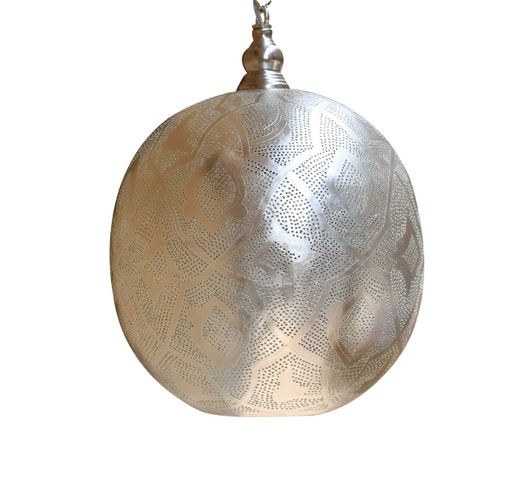
Choosing Fixtures with Clean Silhouettes
Not all Moroccan lighting is equally suited to minimalist spaces. For this pairing to work, lean toward fixtures with geometric rather than ornate silhouettes. Look for clean, symmetrical shapes: spheres, cylinders, teardrops, and simple domes.
The cutout patterns can still be intricate, that is part of the magic, but the overall form of the fixture should read as simple from across the room. When you squint at it, you should see a clean shape, not a busy one.
Finish Matters
In a minimalist setting, the metal finish becomes more prominent because there are fewer other textures to compete with it. Brushed brass and matte antique gold work best because they have warmth without shine. High-polish brass can look flashy in a minimal room, while dark bronze can feel too heavy.
Where to Place Your Statement Piece
In minimalist design, placement is everything. Here are the spots where a single Moroccan fixture has the most impact:
- Over the dining table: This is the most classic placement. A Moroccan chandelier centered over a simple wooden table creates a focal point that draws people in.
- In the entryway: The first thing guests see when they walk in. A single pendant hung in a spare, clean entry makes a memorable first impression.
- Above the bathtub: Minimalist bathrooms are often beautiful but cold. One Moroccan pendant above a freestanding tub adds warmth and luxury without any clutter.
- In a stairwell: If you have vertical space over a staircase, a hanging Moroccan fixture fills it elegantly. The light patterns cascade down the walls as you walk the stairs.
The Shadow Effect in Minimal Spaces
Here is where Moroccan lighting truly excels in minimalist homes: the shadows. When you have plain white or light-colored walls and very little furniture, the cutout patterns of a Moroccan fixture project intricate shadow designs across those blank surfaces. The walls become the decoration.
This is incredibly effective because it adds visual complexity without adding physical objects. Your room stays uncluttered and clean, but it feels rich and layered because of the light and shadow interplay. As the day changes and the light shifts, the shadows move and evolve, giving the room a living quality.
Color Temperature and Ambiance
Minimalist rooms can sometimes feel stark or clinical, especially if the palette is heavy on white and gray. Moroccan brass lighting counteracts this by adding warmth in two ways: the golden color of the brass itself, and the warm tone of the light that passes through it.
Use bulbs in the 2200K to 2700K range for the warmest effect. The light will take on a golden hue as it passes through brass cutouts, making even the most minimal room feel inviting and comfortable.
What to Avoid
- Colored glass: Moroccan fixtures with multicolored glass panels can feel too busy in a minimalist room. Stick to clear glass or solid brass.
- Multiple fixtures in the same style: Matching sets feel like traditional decorating, not minimalism. One is a statement. Two or more is a theme.
- Oversized fixtures in small rooms: Even though you want impact, an oversized fixture in a small minimalist room will feel cramped rather than dramatic. Scale appropriately.
Start With One Beautiful Piece
The beauty of this approach is its simplicity. You do not need to overhaul your entire lighting plan. Find one Moroccan fixture that speaks to you, hang it in the right spot, and let it transform the room. Browse Moroccan pendant lights and Moroccan chandeliers to find the piece that brings warmth and character to your minimalist space.